Blog
Delivering greater flexibility for mixed-vendor fleet management

As manufacturers scale automation across their facilities, mixed fleets of autonomous mobile robots (AMRs) and automated guided vehicles (AGVs) are becoming increasingly common. In fact, hybrid fleet operations, where AMRs and AGVs work side by side, have increased by 46% among logistics operators globally, reflecting growing demand for more flexible automation strategies.
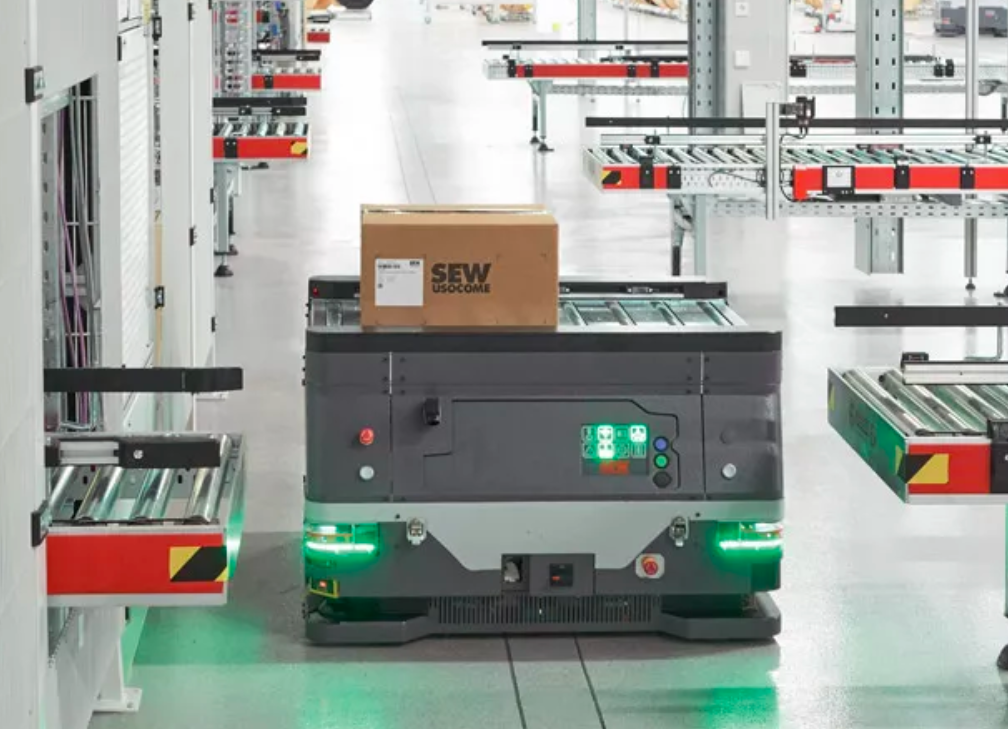
Many operations are now adopting a mixed-fleet strategy that prioritizes workflow needs, payload requirements, and facility navigation over single-vendor dependency. This approach improves flexibility, enables rapid scaling without a full system redesign, and lowers costs.
This introduces new challenges, however, including how to best coordinate traffic, routes, and job execution across multiple autonomous systems without impacting throughput or safety.
Enabling flexible coordination for mixed-vendor AMR and AGV fleets with VDA 5050
Interoperability standards like VDA 5050 address this by defining a common, open standard for communication between autonomous and automated vehicles and the fleet master controller. This allows manufacturers to manage all jobs, traffic flow, and vehicle behavior from a unified fleet management system.
Facilities with highly standardized operations, predictable autonomous vehicle route patterns, routine workflows, and shared traffic zones—common in automotive manufacturing—are often the best fit for centralized mixed-fleet interoperability with VDA 5050.
How OTTO is expanding flexibility with VDA 5050-compliant providers
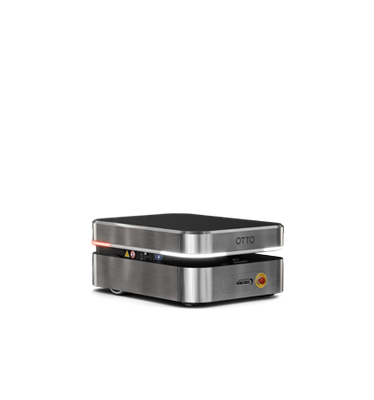
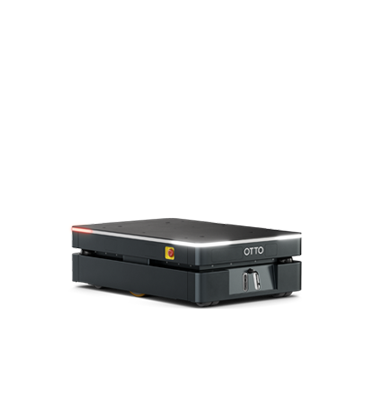
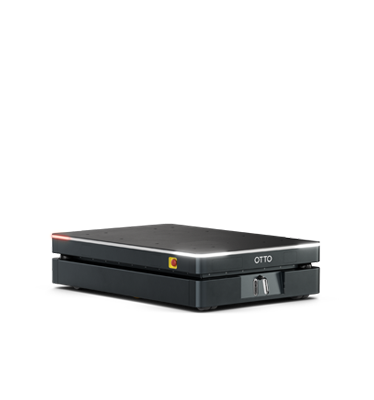
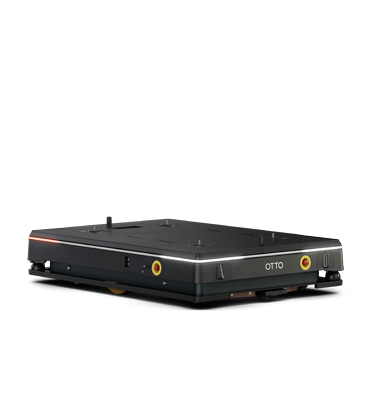
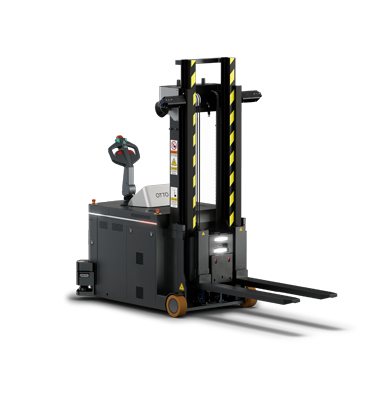
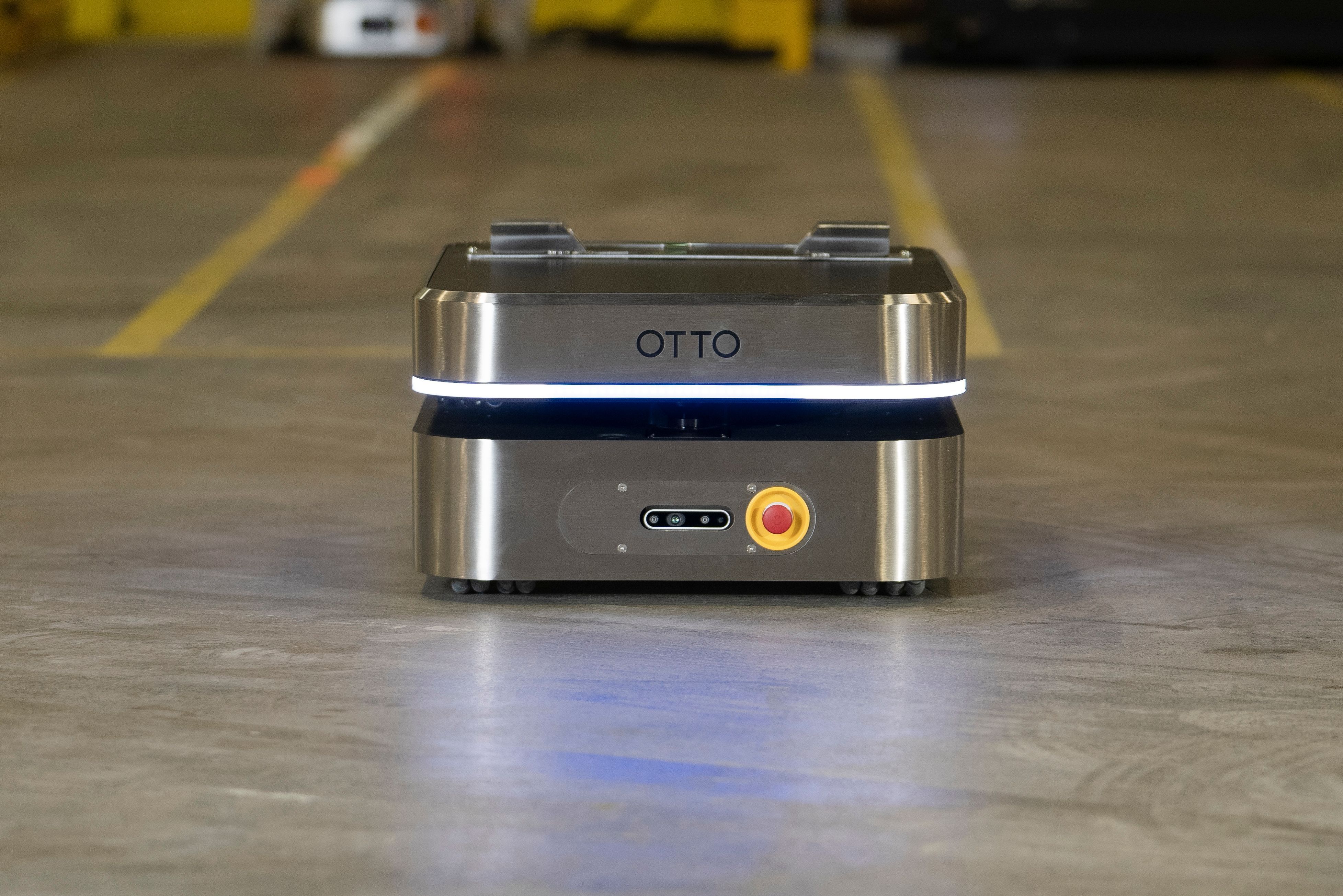
To meet this growing demand, OTTO was one of the first AMR vendors to support the VDA 5050 standard and to open source its connector in 2023. Now, OTTO AMRs are certified with leading VDA 5050-compliant intralogistics software providers, including SYNAOS, NAiSE, and Idealworks.
These certifications give manufacturers more options for coordinating mixed-vendor fleets to maximize production efficiency, optimize floor space and resource utilization, and improve operational resiliency. Simulation results indicate that when AGVs and AMRs collaborate within a shared transport system, throughput can increase by up to 51% compared to AGV-only operations, as AMRs help relieve AGV congestion and reduce transport bottlenecks.
While VDA 5050 provides a standardized path for interoperability, Rockwell Automation offers orchestration software that enables centralized visibility across all systems. In addition, OTTO also supports custom integrations built through third-party middleware solutions. This approach is well suited for facilities with more dynamic workflows, less standardized operations, or existing systems that require deeper integration beyond traffic coordination.
Choosing the right interoperability strategy
As mixed-vendor fleets continue to scale, manufacturers now have more options for cross-platform coordination of autonomous systems. VDA 5050 works best for sites with structured, repeatable operations and shared traffic, while alternative approaches may be better suited for dynamic environments. Evaluating workflow variability, level of standardization, and existing infrastructure is critical to designing an automation strategy that scales effectively.
Since every facility is different, choosing the right interoperability strategy starts with talking to the experts. Contact OTTO to determine the best-fit solution for your facility.

Subscribe to our newsletter
Stay in the loop on product news, case studies, upcoming events and more.
Please allow all cookies to access this form.